Selling your home is a stressful situation – and once estate agent contracts get involved, it’s natural to feel a bit overwhelmed.
Even if you’re not excited about this part of the process, it’s an extremely important one. Your contract outlines what your agent will do, when they’re paid, and how much it’ll cost.
You shouldn’t sign in a hurry, because you may discover there were hidden clauses or costs you didn’t spot.
So, for guidance on the different types of estate agent contracts, what to look out for, and how to get out of an estate agent contract, keep reading.
What is an estate agent contract?
An estate agent contract is the written agreement between you and the agent selling your home.
It should explain the type of agency agreement, the fee structure, and what’s included. It also covers how long the agreement lasts, how you can end it, and when payment becomes due.
A good contract should be clear enough for an ordinary homeowner to understand. All government and regulatory bodies in the estate agency market are clear about this.
These agreements are legally binding. If you break the terms, you could end up in a dispute or even face legal action.
Sole agency agreement
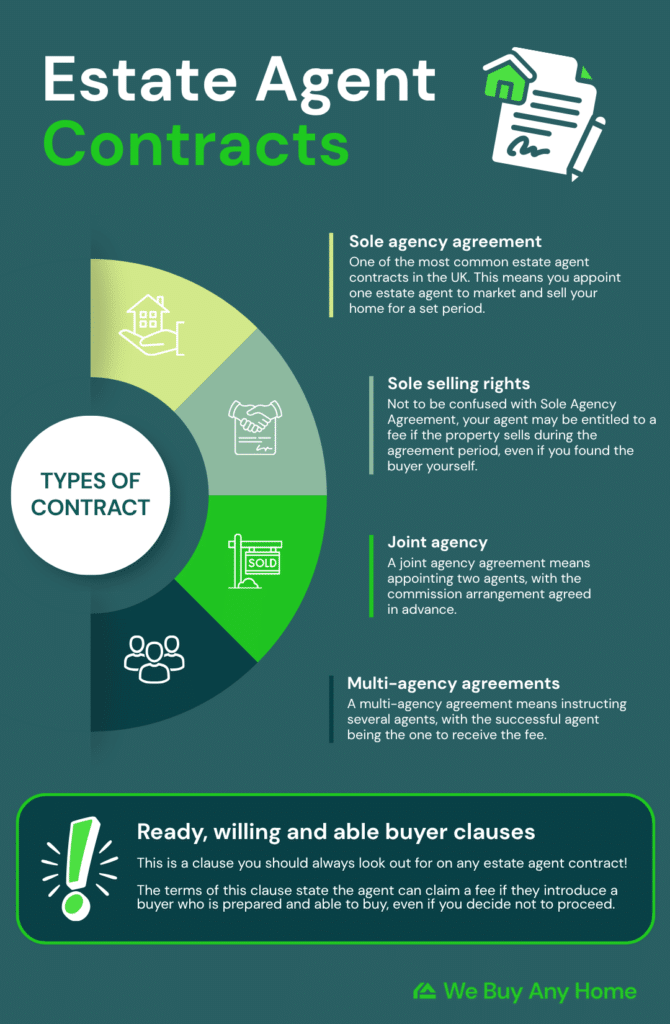
A sole agency agreement is one of the most common estate agent contracts in the UK. It means you appoint one estate agent to market and sell your home for a set period.
Under a typical sole agency agreement, if your agent introduces the buyer, they’re entitled to their fee. If you find your own buyer privately, though, you may not have to pay your agent’s commission.
Sole selling rights
Estate agent sole selling rights are where you need to be especially careful. It may sound similar to sole agency, but it’s not the same.
With sole selling rights, your agent may be entitled to a fee if the property sells during the agreement period, even if you found the buyer yourself. That could mean your neighbour, a family friend or someone who approached you to buy.
You should be cautious about this type of arrangement. It’s a far bigger commitment than a sole agency agreement.
Joint agency and multi agency agreements
A joint agency agreement usually means appointing two agents, with the commission arrangement agreed in advance.
Meanwhile, a multi agency agreement means instructing several agents, with the successful agent normally receiving the fee.
On one hand, more agents feels like it could result in extra exposure and more competition. However, your fees are also likely to be higher. Agents may also be less motivated to prioritise your property if another firm could secure the buyer and receive the fee. Multi agency may suit sellers who need a faster sale or broader access to buyer networks, while sole agency is often better for keeping fees lower and working closely with one agent.
Estate agent fees
Estate agent fees are one of the biggest reasons to read the contract properly. The fee might be a percentage of the final sale price, a fixed fee, or an upfront charge.
Percentage commission is common with high street agents and is usually paid on completion. Fixed fees are more common with online agents and may be payable upfront or deferred.
Always ask whether VAT is included. A quote of 1.2% plus VAT isn’t the same as 1.2% including VAT. On a valuable property, that difference can be hundreds or even thousands of pounds.
Also check for minimum fees. For example, an agent may advertise a low percentage but include a minimum charge that applies if your property sells below a certain level.
What’s included in the fee?
You mustn’t assume that everything is included. Ask whether your estate agent contract covers professional photography, floorplans, EPCs and brochures. You should also check for information on ‘For Sale’ boards, premium portal listings, hosted viewings and sales progression.
Sales progression is especially important, because getting an offer is only half the battle. Someone needs to chase solicitors, keep the buyer engaged, and monitor the chain.
No sale, no fee
Even though this model sounds simple, you must still check the details. There could be charges for marketing, photography, floorplans, withdrawal, cancellation, or work already carried out if you end the agreement early.
You also need to know when a ‘sale’ counts for fee purposes. Is the fee due on exchange, completion, or when a ‘ready, willing and able’ buyer is found? That distinction is important.
Tie-in periods and notice periods
An estate agent tie in period is the minimum time you’re committed to your agent. It’s there because your agent may spend money and time marketing the property before earning anything.
A tie-in period of four to twelve weeks is common, but what feels reasonable depends on your situation.
If you need flexibility, a long tie-in can be a problem. If your market is slow and the agent is investing properly, a reasonable commitment may make sense. You should also check the notice period and possibly attempt to negotiate on this.
Leaving during the tie-in period could mean paying fees or other charges, even if the agent has not sold your property, so check the contract carefully before ending the agreement early.
Ready, willing and able buyer clauses
One of the most disliked clauses in estate agent contracts is the ‘ready, willing and able buyer’ clause. This can mean your agent claims a fee if they introduce a buyer who’s prepared and able to buy, even if you decide not to proceed.
That could be a nasty shock if your circumstances change or you decide the offer isn’t right. You may still need to pay the fee, despite not proceeding with the sale. Make sure you’re extremely cautious about these clauses.
Continuing liability and dual fees
Continuing liability means an agent may still be able to claim a fee after the agreement ends if your property later sells to someone they introduced.
While the concept might seem fair, broad wording can complicate matters. For example, what counts as an introduction – an email enquiry, a portal click, or a viewing?
Dual fees are another potential risk. This can happen when you switch agents or instruct more than one agent without fully understanding the first contract. Two agents may both claim they introduced the buyer.
Before moving agents, ask your first agent for a written list of buyers they introduced and check your ongoing liability.
Verbal promises are not enough
If an agent promises something, make sure it’s in the written contract. Handwritten amendments, emails and verbal assurances should all be reflected clearly before you sign. Disputes are usually decided on the paperwork, not what someone said verbally.
Seller checklist before signing
Before signing an estate agent contract, check the commission rate, whether VAT is included, and whether there’s a minimum fee.
You must also be clear about what type of agreement it is, how long the tie-in period lasts, how much notice you must give, whether withdrawal fees apply, and what marketing is included.
Confirm whether photography, floorplans, EPCs, portal listings, boards, viewings and sales progression are covered. Then check about dual-fee risk and complaint/redress information.
Most importantly, ask yourself whether you actually understand what you’re signing. If the answer is no, don’t sign yet.
What if you are unhappy after signing?
If you’re unhappy after signing and wondering how to get out of an estate agent contract, don’t panic.
Check whether there’s a cooling-off or cancellation period, especially if you signed away from your agent’s office or online. Then check the tie-in period and notice requirements.
Give notice properly and in writing. Keep copies and ask for confirmation of the end date and any buyers your agent says they introduced.
If you believe your agent has acted unfairly, use their complaints process. If that doesn’t resolve matters, you may be able to escalate to the relevant redress scheme.
For serious disputes, take legal advice before refusing payment or signing with someone else.
Frequently Asked Questions
What is an estate agent contract?
It’s the legal agreement between you and your agent selling your property. It explains fees, services, contract type, tie-in period, notice terms and when payment is due.
What is the difference between sole agency and sole selling rights?
Under a sole agency agreement, you may not have to pay your agent if you find your own buyer. With estate agent sole selling rights, your agent may still be entitled to a fee even if you find the buyer yourself.
Can I negotiate estate agent fees?
Yes, often. Many agents expect some negotiation, particularly on commission. Just make sure any agreed reduction is written into the contract.
How long is a tie-in period?
An estate agent tie-in period is often around four to twelve weeks, but it varies. Check whether there’s also a notice period, as this can extend your commitment.
Can I cancel an estate agent contract?
Usually, yes, but the cost and timing depend on the contract. If unsure, get advice before acting.
Read your estate agent contract carefully
You need to read your estate agent contract carefully. The wrong clause can cost you money, time and flexibility, whereas the right contract can help your sale run smoothly.
If you’d rather avoid estate agent contracts altogether and want a faster, more certain route, WeBuyAnyHome can help you sell your house fast. Visit Get My Cash Offer and see what a direct cash sale could look like for your property.