If you’ve ever requested a cash offer for your home and thought, “That’s less than I expected”, you’re certainly not alone.
It’s one of the first questions homeowners ask when they consider selling to cash house buyers: why isn’t the offer the same as the price I might achieve through an estate agent? Put simply, a cash offer and an open-market valuation are very different things.
When We Buy Any Home calculates a cash offer on a home, we’re not only looking at what the property is likely to be worth, but also at the condition, its location, local market evidence, and the work that may be required. There’ll also be attention given to the likely resale value, the timescale involved, any legal issues, freehold/leasehold status, and the costs and risks of buying it directly for cash.
A traditional estate agent is marketing the house to a wide pool of potential buyers. Meanwhile, a cash buyer is taking on the property directly, along with the responsibility and risk that comes with owning it and subsequently trying to sell it.
In this context, there’s a trade-off: you get speed and certainty with cash buyers for houses, at the expense of achieving the highest possible sale price.
Why is a cash offer different from an estate agent valuation?
Let’s look at an example:
An estate agent might value your home at £300,000. That doesn’t necessarily mean someone will walk through the door tomorrow and hand you £300,000.
An estate agent’s valuation is an indication of what the property might achieve on the open market. The actual selling price could be higher, lower or somewhere in between. Even the Government’s guidance on selling a home points out that a valuation isn’t a guarantee that a property will sell for that amount. Additionally, estate agents will often overvalue your home to win the instruction, and then later on they will have to reduce the price because it won’t sell at that higher price.
Cash buyers for homes work differently. Rather than marketing your property to a wide pool of potential buyers and waiting to see who’s prepared to pay the most, a cash buyer effectively puts a price on the property based on the value and risks involved in buying it directly and quickly.
So, one is an indication of potential open-market value, where there’s no guarantee the property will sell, while the other reflects the price at which a cash buyer is prepared to take the property off your hands, with all the costs, risks and responsibilities involved, as well as the certainty of a guaranteed sale.
Speed vs Price
If your only objective is getting the maximum possible price for your property, a traditional open-market sale is usually the better route. There’s no guarantee, of course, but exposing your home to a wider pool of buyers gives you the opportunity to see what the market is prepared to pay.
The downside is that your sale could collapse months after you accept an offer. Or they could drop their price at the last minute. You don’t know how long the process will take, either.
With a direct cash sale, the appeal is different. You may be prepared to accept a lower figure in exchange for certainty, fewer hurdles and a quick completion. It simply depends on your priorities, including the factors influencing your decision to sell.
The risk a cash buyer takes on
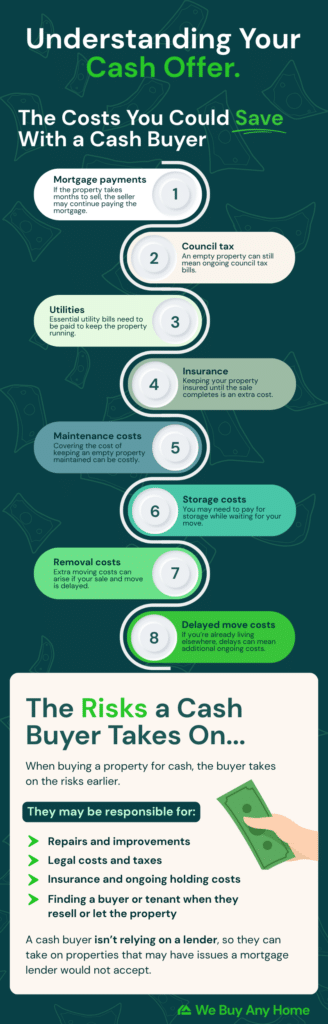
A cash-buying company also has to account for the higher rates of Stamp Duty Land Tax that can apply to its purchase, including the additional 5% surcharge. That cost alone means it can’t simply pay 100% of the property’s open-market value. On top of that, the buyer takes responsibility for repairs and improvements, legal work, insurance, financing or holding costs, as well as the uncertainty and expense involved in eventually reselling or letting the property.
A traditional buyer, particularly one using a mortgage, may be less willing or able to take on certain types of risk. A lender can require a property to meet certain conditions before releasing funds, while either a traditional buyer or a cash-buying company may renegotiate if a survey uncovers significant problems that weren’t previously known.
A direct cash buyer takes the risk earlier, and isn’t reliant on a lender’s conditions for what makes a property worth lending on. That needs to be reflected in the price for the economics to make sense.
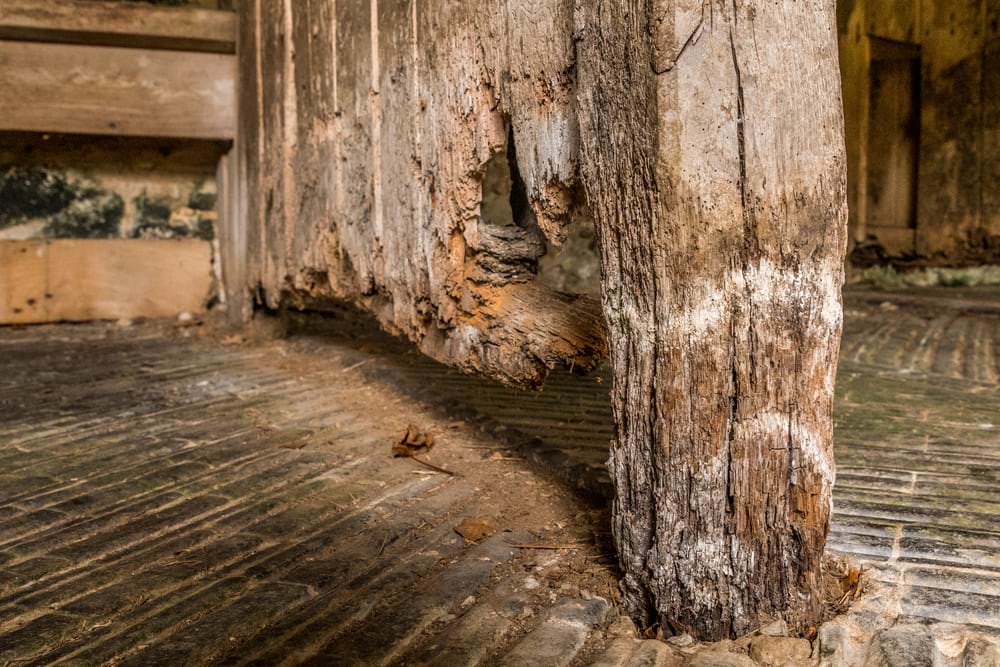
This is also why property condition can have such a noticeable effect on an offer. A house that needs £20,000 of work isn’t necessarily worth £20,000 less than an identical refurbished property: there can also be uncertainty around the final cost, how long the work will take and what the property will ultimately be worth.
Does the seller save on costs when using a cash buyer?
The headline price figure isn’t necessarily the same as the amount you actually receive after selling.
Selling through an estate agent can involve a percentage fee or a fixed fee, while there can also be legal, survey and other costs depending on the circumstances.
For example, MoneyHelper’s guidance advises that selling a home can involve over £5,000 in fees, with estate agent fees commonly calculated as a percentage of the sale price.
Meanwhile, if a property takes months to sell, you may continue paying the mortgage, council tax, utilities and insurance. If you’re already living elsewhere, an empty property can become an expensive burden. You might also face maintenance costs, storage, removal costs or the financial consequences of a delayed move.
This means that you should compare net position and convenience, rather than simply two headline property prices. There is no universal right answer – it all depends on your circumstances.
Cash offer vs market value: which is better?
If maximising the sale price is your main concern and you have the time and patience for the traditional process, selling on the open market could make more sense.
If certainty, convenience or selling your house fast is more important, a cash offer may be worth considering, even if the figure is below the price you believe you could achieve through an estate agent.
Don’t forget that a cash offer for your home is free and no-obligation. You can compare the offer against other routes before deciding.
Frequently Asked Questions
Why is my cash offer below market value?
The offer reflects the property’s likely value alongside its condition, location, demand, required works, legal position, expected resale value and the costs and risks involved in buying directly.
Can I negotiate a cash offer?
It may be possible, depending on the property and circumstances. If you believe there are factors that haven’t been properly reflected in the assessment, it’s reasonable to ask questions and explain why you think the property warrants a higher figure. Any reputable cash-buying process should be transparent about how an offer has been reached.
Is the offer guaranteed?
An offer should always be understood on the basis of the terms attached to it. If new information emerges about the property, particularly following appropriate checks, that can affect the offer.
What happens after I accept?
Once you decide to proceed, the sale moves into the legal process. The exact steps and timescale depend on the property and your circumstances, but conveyancing and the necessary checks still need to take place.
Do I have to proceed?
No. Requesting an offer does not mean you have to accept it.
How quickly can completion happen?
It depends on the property and the circumstances of the sale. In some cases, it can complete within 7 days. Other companies say that 2 or 3 weeks is standard. It may take longer, though, if there are unexpected delays.
Is a cash sale right for you?
Look at the whole picture: the likely sale price, selling costs, repairs, mortgage payments, the time involved, the uncertainty, and most importantly, what you actually need from the sale.
If you want to know what your options look like, requesting a cash offer on your house is free and comes with no obligation to proceed. You can simply use the figure as another piece of information and compare it with the open-market route.
Get in touch with WeBuyAnyHome today to learn more.