Property is one of Britain’s great national obsessions.
It’s up there with queuing, tea, and weather commentary.
And it stretches back for centuries.
The phrase ‘An Englishman’s home is his castle’ dates to 1604. And the legal concept behind it a century earlier.
Homes in the UK have also long reflected class, ambition, and identity.
So, how have homes changed over the centuries? And what trends do experts see coming?
Read on to find out.
Britain’s first homes
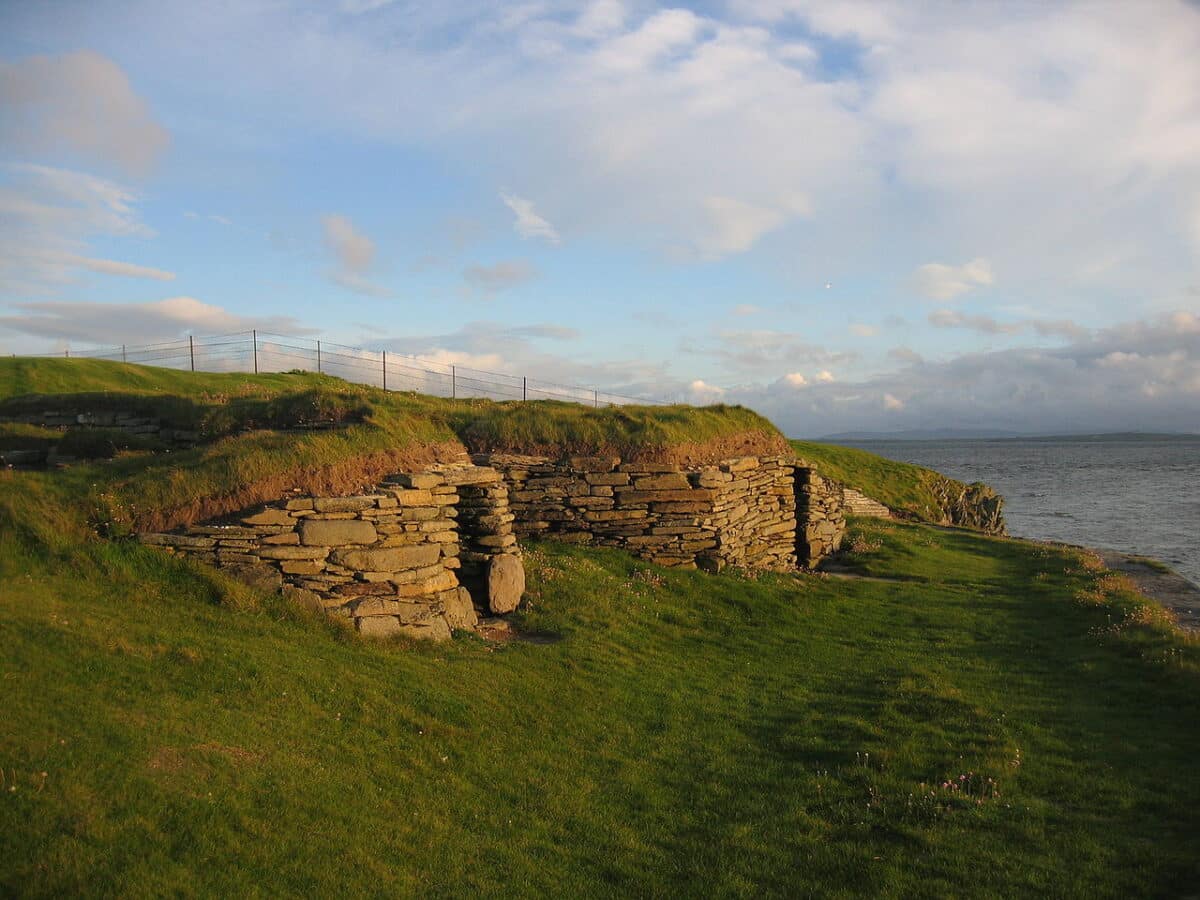
Britain’s oldest still standing homes are the Orkney Island’s two Neolithic (10,000 BC – 2,200 BC) stone houses, the Knap of Howar.
They are estimated to be around 6,000 years old (several centuries older than Stonehenge!).
The larger of the two structures is a rectangular room filled with stone furniture and a ground-based hearth for cooking and heating. It is separated from the main living area by a thick stone wall.
Britons and Romans
During the Iron Age in Britain (800 BC – AD 43) timber-framed buildings with round, thatched roofs were common.
These usually had floors made of compacted earth and with built-in central hearths.
Roman Britain (43 AD – 410 AD) saw the introduction of new building techniques and trends, including:
- Stone and ceramic floors
- Underfloor heating
- Central courtyards.
However, these were generally limited to the homes of Roman elites in their settlement.
Anglo-Saxon Britain (5th century AD – 1066)
During Anglo-Saxon Britain, most houses were still timber-built, often without proper foundations.
They were designed using the “earth-fast” method, which meant that wooden posts were sunk straight into the ground.
When the timber rotted, you didn’t call a builder – you just built another one next door.
Inside, it was dark and smoky. Life revolved around a bubbling cauldron over the fire and people slept in hard wooden beds pushed up against the walls.
Most of Britain still lived in rural villages at this point. By the end of the period, in 1066, it’s estimated that only 10% of the population lived in towns.
The Norman period (1066 – 1216): Innovation and ventilation
The Norman period, saw the introduction of several important architectural innovations, including:
- Chimneys
- Rounded arches
- Rib vault roofs.
And more. These were limited to a small percentage of elites at first but eventually spread across much of the British Isles.
Chimneys improved ventilation, which in turn allowed smaller rooms and lower ceilings to appear.
The Tudors (1485 – 1603): Wattle and daub
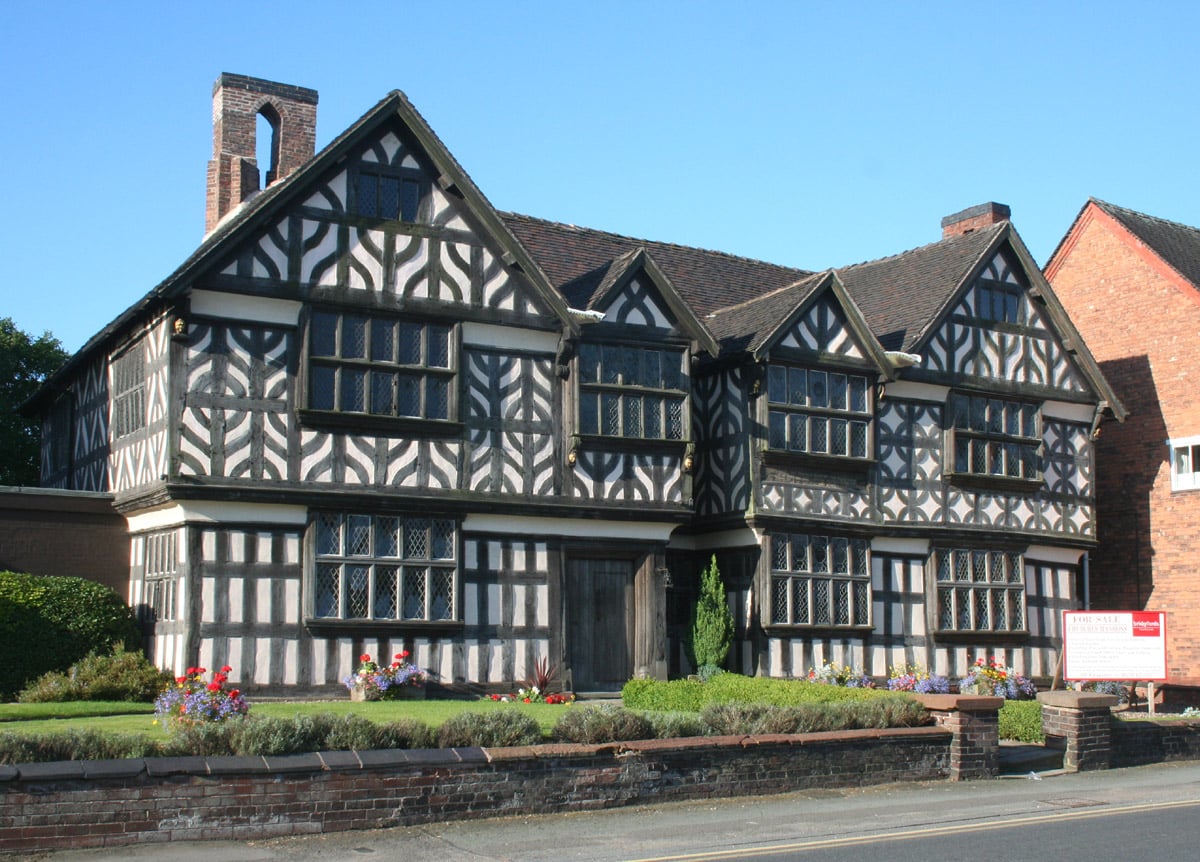
Throughout the Tudor period (1485 – 1603), homes were often built with timber frames and wattle and daub infills.
The latter is a combination of wooden strips held together in with clay and straw mixtures.
It was often whitewashed, creating the distinct Tudor style of housing you can often still see across the nation today (some of which are now listed buildings).
The Stuarts (1603 – 1714): Stones & window taxes
During the Stuart period, stone replaced timber for wealthier merchants. This trend sped up after the Great Fire of London in 1666.
Londoners also swapped thatch for tile and wood for brick – setting the tone for the centuries to come.
The infamous window tax was introduced in 1696. The more windows a property had, the richer its residents appeared.
Many homeowners bricked up their windows to save money. You can still spot remnants of this today.
Georgian period (1714 – 1830 AD): Symmetry & style
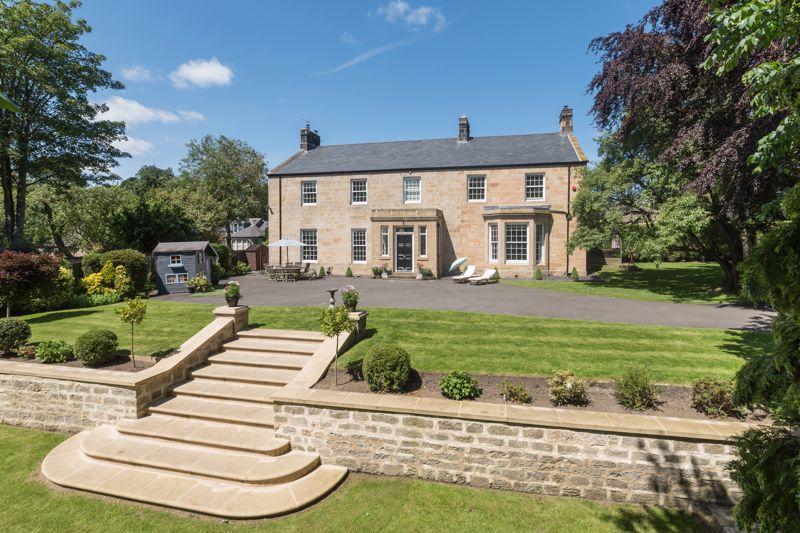
If the medieval period was all about survival, the Georgian era was about style.
Many homes were designed around a few key features:
- Plain, formal facades
- Symmetry
- Harmonious proportions
- Large windows.
Rows of tall, elegant terraces appeared all over the UK, with everything perfectly measured and balanced.
Of course, the reality of living in these houses could be less glamorous.
Some servants lived in cramped top-floor quarters, while the first floor was used primarily for wealthier residents.
Victorian (1837 – 1901): Population growth & Practicality
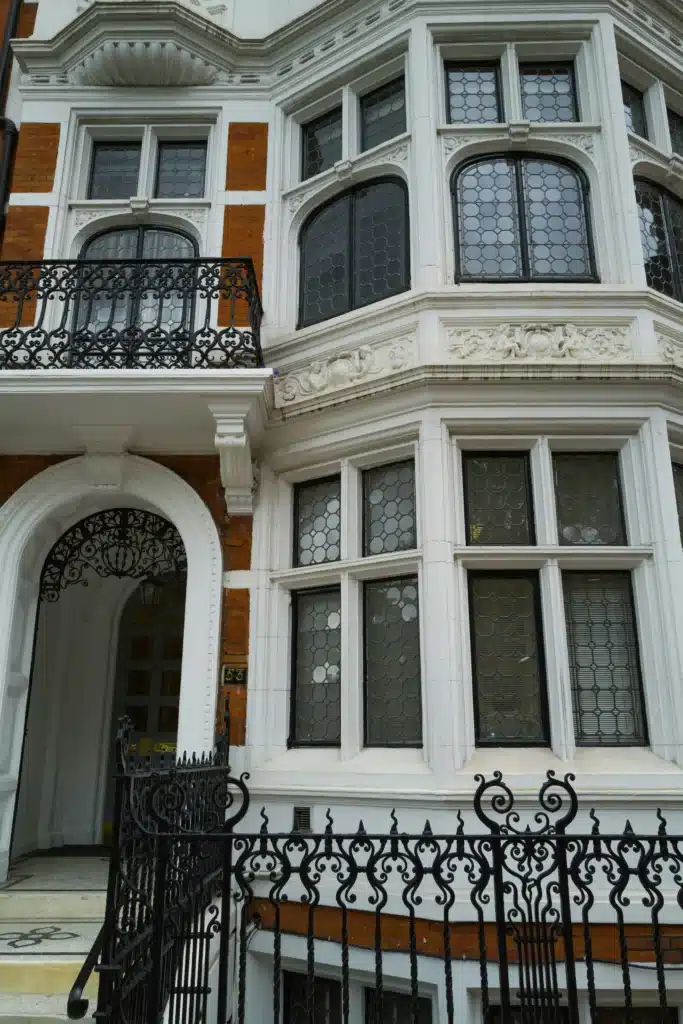
The Victorian period was a period of enormous economic and population growth in the UK.
The population exploded from 2 million in 1800 to 20 million by 1900.
At the beginning of this period, around 50% of the population lived in towns and cities. By the end, 75% did.
So, the number of terraced houses increased. Many of these still stand today.
Victorian homes were practical, narrow, and built for the many, not the few.
Bay windows became a national obsession, giving even small homes a touch of glamour. The sounds of horses, carts and shouting traders drifted in through their thin glass.
The kitchen and living room were often the same space.
Public health reforms in the 1840s began linking housing to health, leading to early building standards and cleaner, safer streets.
It was the first time the government admitted that where people lived affected how long they lived.
The 20th century
First World War (1914 – 1918) after its aftermath
The First World War changed everything in the United Kingdom. Millions returned from the trenches to find there weren’t enough homes to go around.
The government’s solution was to build “homes fit for heroes”, a national slogan that summed up their ethos to house building.
For a while, this approach was a success. Between the two major wars, new suburbs popped up all over the place.
During the 1930s, developers built 350,000 homes a year, with most of them being three-bed semi-detached houses.
The Second World War (1939 – 1945)
Unfortunately, the Second World War broke out. The Blitz (the German aerial bombing campaign) destroyed or damaged significant numbers of an estimated 2 million homes across the country.
This contributed to a shortage of homes after the war. At one point, approximately 40,000 people moved into former military camps across the country without permission.
Many in the country supported this. The government also knew it needed to address housing shortages, and council houses moved into the spotlight.
The Post-War Period
The 1950s saw a building frenzy.
Conservative governments were some of the biggest drivers of social housing, with 250,000 council homes built annually.
Over 30,000 of these were British Iron and Steel Foundation (BISF) homes, a semi-prefabricated model of home.
Then, in the 1960s, came the tower block revolution. At the time, this was hailed as being the future, but in hindsight, many consider it one of Britain’s biggest urban mistakes.
Inspired by European modernism, tower blocks like Keeling House in Bethnal Green were designed to vertically recreate the “community spirit” of terraced streets.
It was an ambitious approach, and unfortunately, the reality usually fell short. They often looked bleak, isolated and poorly maintained.
Some, like the notorious Derwent Tower in Gateshead, were demolished.
Others, like the Barbican in London, still stand. As does Newcastle’s Byker Wall, a colourful structure built with input from residents.
But the post-war dream of modernist living quickly lost its shine. By the 1980s, Brutalism was out. Home ownership was now very much in.
Late 20th Century: The ‘Right to Buy’ era
Margaret Thatcher introduced the “Right to Buy” scheme on October 3rd, 1980.
It offered discounts of up to 70% on council flats. This gave tenants the opportunity to become homeowners and feel secure and safe in their property.
By the mid-1990s, more than 1.5 million council homes had been sold.
For some, this was a positively life-changing experience, giving them pride and proof of success.
Unfortunately, the shortage of council housing being created by this scheme was not addressed.
Since the 1990s, more council homes have been sold than built new ones as the nation’s population has increased. This leaves fewer affordable options for future generations.
Changing homes
By the late 20th century, the numbers had changed quite dramatically from years gone by.
In 1918, fewer than 1 in 3 Britons owned their home. By the end of the 1960s, it was half. Today, around 65% of households are owner-occupied.
Meanwhile, the average home has shrunk. In the 1800s, a typical plot was 913 square metres.
By the early 1900s, it was down to just 268.
Homes in 21st Century Britain
Houses vs flats
Today, most (77%) houses are the most common type of UK property. Semi-detached being the most common type and most other homes are flats.
(By contrast, the US has a slightly lower – 67% – percentage of homes, but a higher portion of detached ones. And in China, an estimated 90% of people live in flats.)
This balance looks set to continue, as houses still make up the majority (81%) of new-build properties.
However, there other aspects of homes are changing…
Smaller and more open-plan
As with the 20th century, 21st century homes in the UK have continued to get smaller.
The average new-build home in the UK is now just 76 square metres.
(For comparison, Danish homes, average 137 square metres. And French homes are 121 square metres.)
Gardens have also shrunk. Between 1920 and 2020, the average garden has halved in size.
And open-plan living has become more common than separate dining rooms. The irony is that people often crave the cosiness those old rooms provided.
Housing & affordability crisis
Despite smaller buildings and more flats, the UK currently faces two big, interlinked housing problems:
- A housing crisis: A lack of supply of new housing.
- An affordability crisis: Rising property and rental costs (driven largely by the lack of supply).
There are many persistent symptoms of this, including:
- Skyrocketing house prices
- Lack of housing stock
- Shrinking floorplans
- The rise of “generation rent”.
Tomorrow’s homes: sustainable, smaller, and more connected
So, what happens next?
Well, the emerging trend in recent years has undoubtedly been a sustainability-focused approach to property.
With government plans to outlaw rental of properties with an EPC rating below “C” by 2028 for new tenancies, and 2030 for existing ones, energy efficiency is no longer a luxury – it’s a legal requirement.
There’s also been a quiet cultural shift. The British dream of a detached house with a garden isn’t dead, but it’s changing.
More people are embracing city-centre flats, shared ownership, and even co-living developments. Flexibility is becoming more valuable than square footage.
In a surprising turn of events, some historians even suggest that we’re circling back to the medieval model.
Small, multifunctional, community-driven homes are where work and life blur together. The technology inside these houses may be new, but the principle isn’t.
What does your home say about you?
Every generation has a different image on who they want to be, and how they should be living.
Each tends to argue that their approach was ‘better’ than the newcomers. Whether that’s true is open for debate.
The Georgians prized elegance, while the Victorians prized practicality. And the post-war dream was about fairness and fresh air.
Now, in the 21st century, the focus seems to be on cost effectiveness, investment, and eco-consciousness.
Will this trend change in the next few years? Only time will tell…
But one thing hasn’t changed.
Whether you live in a terraced house in Leeds, a new-build in Milton Keynes, or a flat in London’s Docklands, your home still says everything about you.
And for all the talk of crises, there’s something oddly comforting about that.
Home ownership
Home ownership in the UK have also changed over time, especially in the last century.
Back in 1919, only about 10% of the nation owned property. This figure rose rapidly in the following decades, reaching around 70% by the year 2000.
However, it has now shrunk to around 64% today. And many experts expect this decline to continue.
Selling homes
The ways people sell homes have also changed.
People often used to sell their homes privately and physically hand over cash and title deeds.
The countries’ rapid urbanisation in the Victorian era led to emergence of professional estate agents and property auctions.
National estate agent chains and professional standards and regulation followed throughout the 20th century.
Alternatives to estate agents have also emerged, including online channels and cash-buying companies.
The latter (companies such as We Buy Any Home) offer a transparent and stress-free alternative to traditional estate agency routes by allowing homeowners to sell your house fast – often completing within days rather than months.